Home / Blogs / The Difference Between LLC and Ltd: An Overview
THE DIFFERENCE BETWEEN LLC AND LTD: AN OVERVIEW
LLC and Ltd are two popular legal structures for businesses, both offering limited liability to owners. However, there are still many differences in how they operate and in their legal regulations. In this article, we’ll take a closer look at LLC and Ltd, along with the benefits and challenges they bring.
What Is an LLC?
LLC, also known as a limited liability company
LLC (Limited Liability Company) is a US business type combining elements of a corporation and a partnership. One of an LLC’s biggest advantages is limited liability protection for members. This means owners aren’t personally liable for the company’s debts and legal obligations. This form is very flexible in terms of tax and management, making it an ideal choice for small businesses.
A popular business structure in the United Kingdom
Ltd (Limited) is a popular business structure in the United Kingdom, Ireland, and Commonwealth countries. This business type is divided into two main types: Private Limited Company and Public Limited Company. In a private limited company, shares aren’t publicly traded. Meanwhile, a public limited company can list shares on an exchange. Ltd offers limited liability to shareholders, similar to an LLC, protecting them from debts beyond their initial investment.
Comparing LLC and Ltd
Limited liability: Both LLC and Ltd offer limited liability protection to owners. However, an LLC usually focuses on tax and financial obligations. For Ltd, this protection mainly relates to protecting shareholders from the company’s debts.
Management structure: An Ltd company needs at least one director and has a clear officer-appointment process. Meanwhile, an LLC doesn’t require a director. LLC members can freely manage the business without following rigid regulations.
Ownership: Ltd can have from two to fifty members if it’s a private company, or more if it’s a public company. Conversely, an LLC can be owned by one or more members, depending on the business’s size and goals.
Tax: Both LLC and Ltd use pass-through taxation. Profit or loss passes directly to members or shareholders. This helps avoid double taxation, a major advantage for both types.
Members: With both LLC and Ltd, members are only financially liable within the scope of the capital invested. If an LLC runs into financial trouble, members aren’t personally liable for the company’s debts.
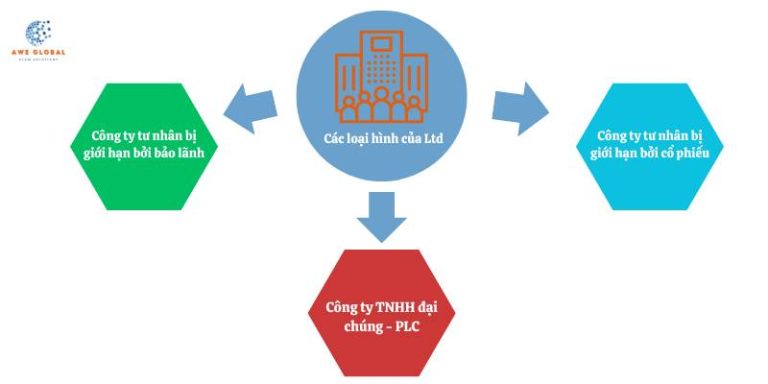
Types of Ltd
Types of LTD
Private Company Limited by Guarantee: This company type has no share capital. Instead, members commit to pay a fixed amount if the company is liquidated. This type is usually used for charities or nonprofits.
Private Company Limited by Shares: This company has shareholders with limited liability, but shares aren’t publicly traded.
Public Limited Company (PLC): A PLC’s shares can be publicly listed on a stock exchange.
Advantages and Disadvantages of LLC
Advantages of LLC:
Flexibility: An LLC doesn’t require a rigid management process like Ltd. Members can freely manage the company without needing to appoint a director.
Tax advantage: An LLC helps avoid double taxation, optimizing profit for members.
Legal liability protection: Members are only liable within the limit of the capital they’ve invested.
Disadvantages of LLC:
Lifespan: Some LLCs may not continue to exist without careful planning. When a member leaves, an LLC may be dissolved without other provisions in place.
Not suited to large businesses: For large businesses or those with many investors, a corporation may be a more sensible choice.
Advantages and Disadvantages of Ltd
Advantages of Ltd:
Limited liability: Shareholders are only liable within the scope of the capital invested.
High credibility: Public companies (PLC) can publicly list shares, helping increase capital-raising ability.
Clear regulations: Ltd’s management and officer-appointment process is transparent, building trust with stakeholders.
Disadvantages of Ltd:
Requires more paperwork: Forming and managing an Ltd is usually more complex and requires more legal documentation than an LLC.
Less flexible management: Ltd requires appointing at least one director, making the management process less flexible.
AWE Legal’s Support in Forming an LLC and Ltd
AWE Legal provides professional consulting and legal support services for businesses. You can easily choose between LLC and Ltd based on your business’s needs. With an experienced team of lawyers, AWE Legal will help you from company formation, tax consulting, to legal compliance.
In addition, AWE Legal also advises businesses on how to optimize their management structure, helping them choose the most suitable type. If you’re still uncertain between LLC and Ltd, contact AWE Legal now for professional consulting.
Conclusion
Although both LLC and Ltd offer significant benefits, which type you choose depends on your business’s scale and goals. With help from AWE Legal, you’ll make the right, most suitable decision for your business.