Call us now
09 8246 8246
Get a quote
Aug 21, 2026
Product personalization is becoming a leading trend in the e-commerce fashion industry in general and the Print-on-Demand (POD) model in particular. For many large business groups, personalization is not merely a service but creates a clear competitive advantage in the market. So why should you integrate personalization into your POD sales strategy? What should you keep in mind to implement it effectively? The article below will help you better understand this prominent trend.
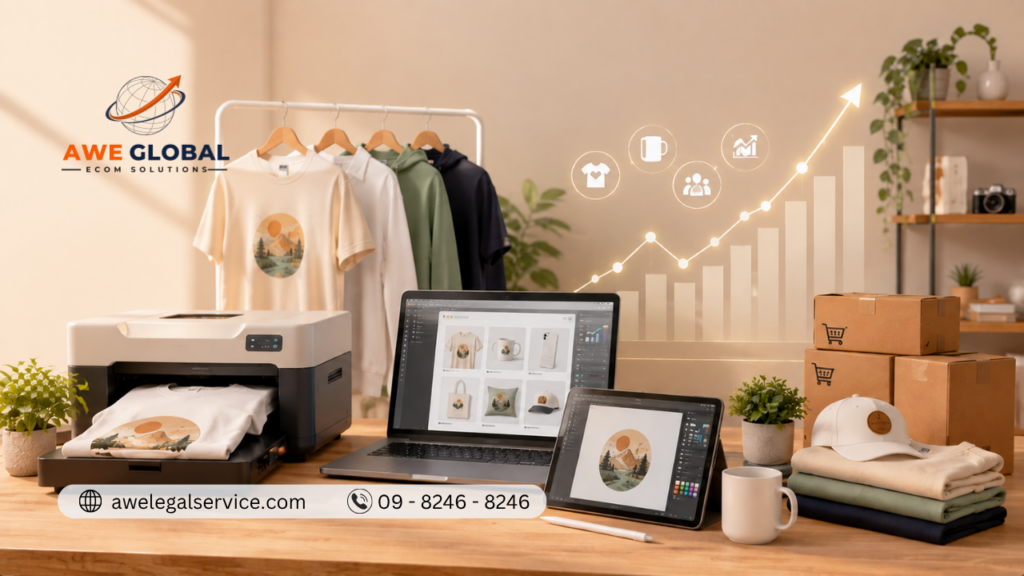
Personalized products are items that let customers express their own personal touch. An easy example is a t-shirt that can be printed with the buyer’s name or personal message. POD products are very well suited to personalization since many platforms let customers directly change elements like a name, text, or image on the design. Moreover, POD supports purchasing in small quantities from 1-2 products, making it convenient for customers to own a truly unique product of their own. Personalization is therefore a bright spot in POD business.
According to some studies, around 36% of customers tend to prefer personalized products over mass-produced items with no personal touch. In fact, 48% of consumers are willing to wait longer to get a POD product with a strong personal touch. Notably, Gen Z — the customer group rapidly growing in purchasing power — wants to assert their individuality much more strongly than previous generations. According to Grandview Research forecasts, the personalized POD market will grow substantially, from $3.64 billion in 2020 to $7.57 billion by 2028 as Gen Z becomes the majority consumer group globally.
Another notable figure is that 1 in 5 customers is willing to pay around 20% more to own a product with their own personal touch. This proves that customers are not only willing to pay more, but also want a more unique, personalized product experience.
Personalized products don’t just meet the need for self-expression — they also create an emotional bond with customers. Customers tend to remember and feel more satisfied with products bearing their own personal touch or the positive experiences that come with them. Feelings of pride and satisfaction with a product reflecting their personal identity make them harder to lose. Research shows that the 90-day customer retention rate after purchasing personalized clothing reaches 29%, significantly higher than the 20% for non-personalized products. This is clear evidence of how effective personalization is at building a loyal customer base.
Beyond boosting revenue and loyalty, personalization also drives many store operating metrics, such as:
Although the benefits of personalization are huge, succeeding at it isn’t simple, since competition in the POD industry is increasingly intense. To create your own distinct mark, you need to pay attention to a few points:
Simply printing a name on a product isn’t enough to stir customers’ emotions. You should be flexible in personalizing both content and form to grab attention. In terms of content, you can draw on elements like zodiac signs, hometown or city, birth year, or specific interests. For example:
In terms of form, besides letting customers change text or add images themselves, you can expand further by:
Understanding your target customers deeply — what they’re proud of and what stirs their emotions — will help you design highly effective personalized products.
Gifts are a special opportunity to leverage the value of personalization. People buying gifts often want to convey their own personal touch through a product given to family or friends. So you can design custom slogans and images on a product to create a deeper impression, for example:
Research shows that 77% of customers want a more personalized shopping experience on e-commerce websites. It’s not just about the product but the entire buying journey. So, beyond personalizing the product, you should build a personalized interaction experience through elements like custom pop-ups and email-marketing campaigns that send distinct messages to each customer segment.
Carefully segmenting customers and sending offers and discount codes suited to each group will increase satisfaction, retain customers, and encourage repeat purchases. In the highly competitive POD industry, building a comprehensive personalized experience is the key to establishing a sustainable brand.
Each POD platform has its own requirements and process for running personalized sales campaigns. So you need to thoroughly understand how to prepare design components, set up product-change logic, and every step needed to give customers a smooth, convenient buying experience. Planning a personalized sales campaign is different from a traditional campaign, requiring more thorough and in-depth preparation.
Personalization in the Print-on-Demand model is opening up many potential opportunities, both in revenue and in building a loyal customer base for your store. To make the most of this advantage, you need to develop a creative strategy, diversify your personalization methods, and focus on the customer experience throughout the shopping journey. Hopefully this article has offered deeper insight into the personalization trend and inspired you to apply it effectively to your own POD business.